How were indentured servants similar to and different from slaves, and how did that status change over time in colonial Virginia?
Select a highlight to read its note.
No yellow annotations for this aim yet. Blue highlights connect to the key ideas.
Listen to chapter 3
20:38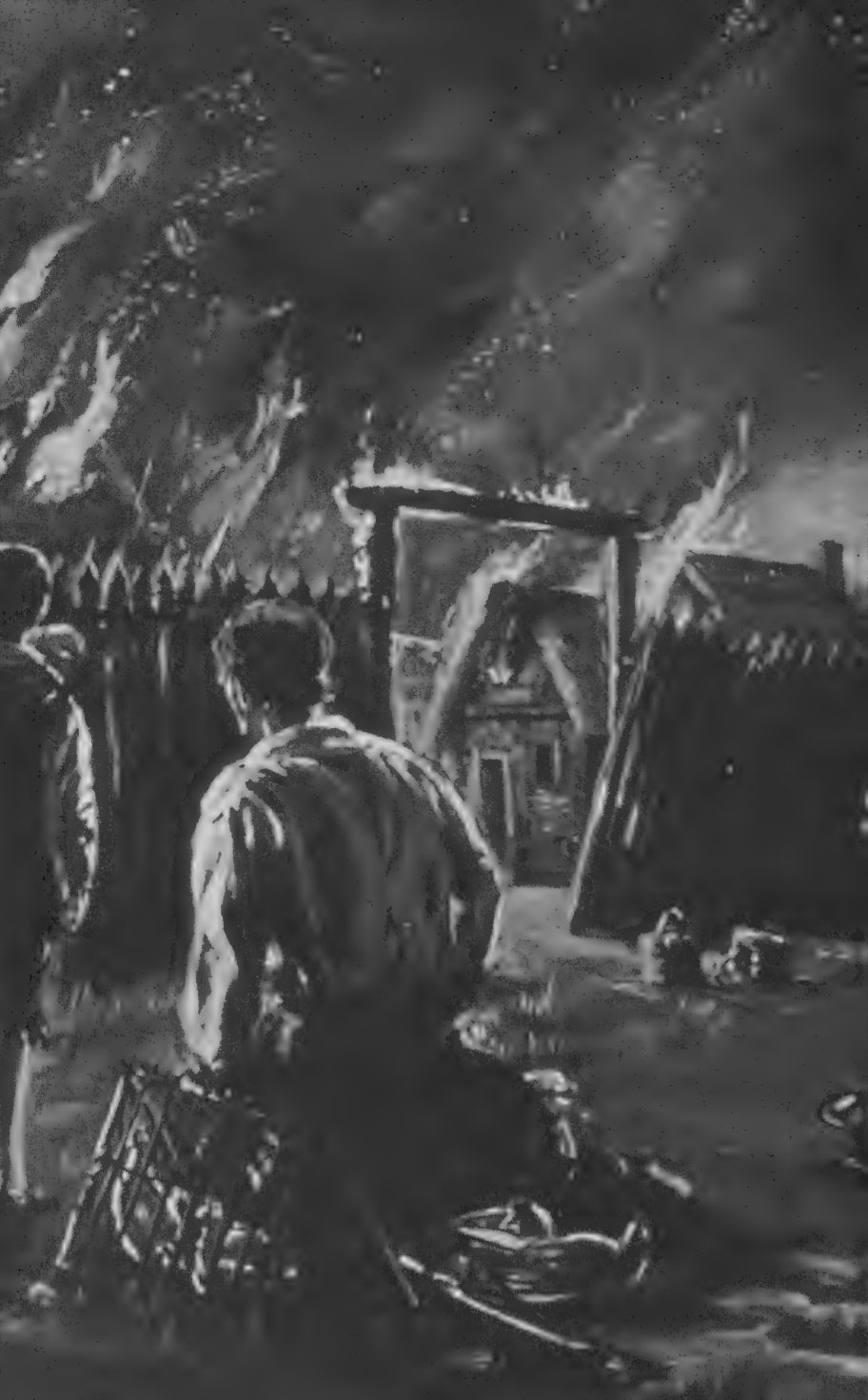
Detail: Violence erupted in the Virginia colony in what became known as Bacon’s Rebellion, 1676.
Chapter 3
The Hidden Origins of Slavery
FOUR BARRELS OF TOBACCO arrived on a London shipping dock in 1613. This was the first shipment of tobacco from the English colony in Virginia. It would not be the last. The market for tobacco grew as fast as the plant itself. Just seven years after that first small shipment, the colony sent sixty thousand barrels of tobacco to London.
The growing demand for tobacco created a demand for labor. People were needed to clear the planters’ new fields and to plant and tend the tobacco, which required a lot of backbreaking care during the growing season. Then came harvesting the leaves, hanging them on lines to dry out, and packing them into barrels for export.
If the land-owning colonists were to make fortunes from tobacco, they needed people to work their plantations. To meet that need, they created a complicated social structure in the Virginia
colony—one that led, in time, to slavery and rebellion.
Slave or Servant?
Twenty Africans arrived in the Jamestown colony in 1619, carried on a Dutch ship. They had probably been captured in wars or raids by enemy tribes before they were sold as slaves. These were the first blacks brought to the English North American colonies. Although they were not free, in Virginia they were not really slaves.
A slave is a person who is regarded as property under the law. Enslaved people belong to others and are required to work without pay for life, or until set free by their owners. In 1619 Virginia had no law making slavery legal. The twenty Africans who were brought by the Dutch ship were sold, but not as slaves. They were indentured servants, like many of the white laborers who were coming to the colony at that time.
An indentured servant was bound by law to work for a master for a set period of time, usually four to seven years. The servant owed this labor to the master because the master had paid for the servant’s voyage to America, or had paid to acquire
the servant from someone else (such as the Dutch shipmaster who brought the first twenty Africans). At the end of the indenture, or term of service, indentured servants were free to look for jobs, claim land of their own, or do whatever they could to support themselves.
English colonies outside North America relied heavily on African labor. The Caribbean island of Barbados, for example, had 20,000 black slaves by 1660, which meant that the majority of the island’s population was black. But in Virginia the black population grew very slowly. In 1650 there were three hundred blacks in the colony, about 2 percent of the total population. Twenty-five years later the black population of Virginia numbered just sixteen hundred or 5 percent.
Why did the Virginia colonists import so few African workers, if they needed labor so badly? The answer lies in an important difference between the Barbados and Virginia colonies.
Most of the English planters in Barbados were businessmen who planned to make their fortunes on the island and then return to England. Most of the Virginia colonists, though, had brought their families with them. They planned to stay in America, and they wanted to create a reproduction
of English society in Virginia. Because English society was white, they wanted Virginia society to remain white as well.
Three-quarters of the people who came to the Virginia colony before 1700 were indentured servants. Most of them were white. They came from England, Ireland, and Germany, from the poor classes and from society’s outcasts: convicts, the homeless and jobless, people who could not pay their debts. Some were tricked into indenture, some were kidnapped, and some came voluntarily, driven by desperation or the dream of a fresh start. In Virginia they found themselves working alongside African servants.
Coming from different shores, the white and black laborers had limited understanding of each other. Still, they shared the same exploitation and abuse. Some servants had to wear iron collars. All had to show passes whenever they left the master’s property. They were beaten and sometimes tortured, and many lived in miserable conditions with poor food. Indentured men and women of both races experienced the day-to-day exhaustion and harshness of plantation labor.
Blacks and whites sometimes joined forces. Servants of both races deserted their masters together
so often that the Virginia legislature complained about the problem of “English servants running away with Negroes.” Court records contain evidence of another kind of partnership—interracial sexual relationships, which were punished by whippings or public shaming of men and women.
Slavery Becomes Law
Punishments differed, too. In 1640 three runaway male servants were captured and returned to their masters. Two were white; one was black. Each man received thirty lashes from a whip. The whites each had one year added to their indentures, and in addition they were ordered to work for the colony for three more years after their indentures ended. But the black runaway, John Punch, was sentenced to servitude for life.
Legal documents from the seventeenth century show that when colonists sold or traded their
servants, white servants were sold for their “full term of time” (the legal period of indenture) while blacks were sold “forever.” In 1653 one colonist sold a ten-year-old black girl named Jowan to another colonist. The sale included any children Jowan might bear, and their children, and so on, forever.
Black servants were becoming property. They were not yet slaves under the law, but they were treated like slaves. Before long, the law was changed to make it official. In 1661 the Virginia legislature passed a law that allowed lifetime servitude, or slavery, for blacks. Eight years later another law defined a slave as property. The institution of slavery had taken root in North America.
Around the time African laborers were made slaves, the number of white indentured servants coming to Virginia started to drop. Yet the colony’s planters did not rush to import more blacks—they still wanted to keep Virginia white. In the 1680s, though, the number of blacks brought into the colony increased. This sudden growth in the importing of blacks came about because of a class war that shook Virginia in the 1670s.
“Poore, Indebted, Discontented and Armed”
Most English colonists who came to Virginia did so as indentured servants. They planned to complete their term of service and become freemen. Then, by law, they could claim fifty acres of land and try to make their own profits by farming tobacco.
The high demand for tobacco, though, created a land boom. The richer colonists scrambled to buy up all the best land. This land-owning elite class controlled the legislature and passed laws to protect its own interests. For example, the legislature lengthened the term of indentured servitude for whites. This helped the elite class in two ways. It increased the supply of labor by keeping servants indentured for longer periods, and it reduced competition from freemen for land.
White freemen and indentured servants saw that it was becoming harder and harder to become landowners. Many of them grew angry, feeling that they had been tricked into coming to America. An unhappy underclass formed, made up of indentured servants, slaves, and landless freemen, both black and white. Their restlessness was shared by poor freemen who owned land, but who had been
pushed onto land claims in the backcountry, far from rivers, roads, and markets.
This unruly underclass was a disturbing element in the social order. In the early 1660s an indentured servant named Isaac Friend plotted to band together with forty other servants, get hold of weapons, and claim their freedom by killing anyone who opposed them. Authorities learned of the plot and crushed
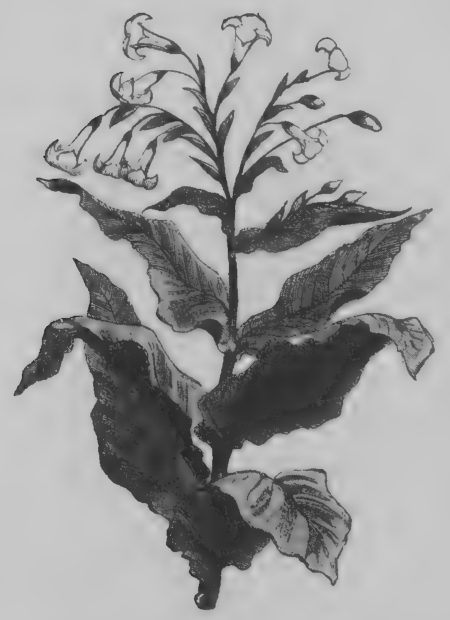
Tobacco plant woodcut.
the rebellion before it started. In 1663 a Virginia court accused nine laborers of another plot, this time to overthrow the government of the colony. Several of the accused men were executed.
The elite class was so afraid of the landless rabble that in 1670 the Virginia legislature took steps to rein in the political power of the poor. The legislature passed a law saying that only men who owned land could vote. But although voting was limited to property owners, guns were not. Colony law required every white man to have a gun for use in defending the colony from attack.
William Berkeley, the governor of Virginia, feared that conditions were growing explosive in his colony. Six out of seven people, he wrote, were “Poore, Indebted, Discontented and Armed.” Freemen and debtors could not be trusted in battle, the governor warned. They might revolt and join forces with the enemy.
Bacon’s Rebellion
Governor Berkeley’s fears came true in 1676 at the hands of Nathaniel Bacon, a tobacco planter in the backcountry. Bacon was concerned about Indian attacks on settlers, so he organized a militia, a
fighting force made up of citizen volunteers. This shocked Berkeley and the other leaders of the colony, who were more afraid of armed white freemen than of hostile Indians.
Ignoring the governor’s concerns, Bacon marched against the Indians, but he and his men killed members of a friendly tribe as well as the Susquehanna who had been hostile to the settlers.
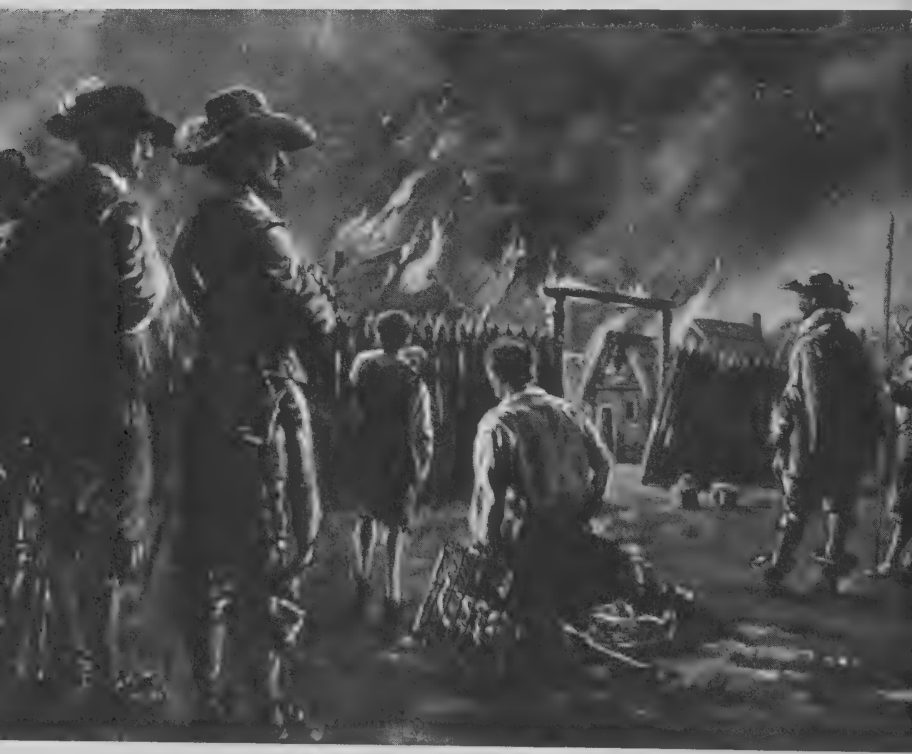
Violence erupted in the Virginia colony in what became known as Bacon’s Rebellion, 1676.
Bacon called his expedition a glorious defense. Governor Berkeley did not agree. He declared Bacon a rebel and charged him with treason, a crime punishable by death.
Bacon’s response was to march with five hundred armed men to Jamestown, the capital of the colony. Black men, given guns by whites, joined the march. The elite of the colony were terrified. They saw the rebels as a desperate mob of low, ignorant people attacking their betters. Governor Berkeley fled by ship.
When the rebels reached Jamestown, they burned the settlement to the ground. Berkeley returned with a squadron of the English navy. A naval officer named Captain Grantham offered to negotiate with a group of about four hundred rebels. When Grantham told the rebels that they had been pardoned and freed from slavery, most of them agreed to surrender. Eighty black men and twenty white men refused. Grantham promised that they would be allowed to retreat across the York River in safety.
Bacon escaped the hangman’s noose, because he was already dead. He had fallen to disease on the way to Jamestown.
Historians have called Bacon’s Rebellion the largest uprising in any American colony before the American Revolution. It was a class revolution that shook the elite landholders to the core. Five years later, Virginia planters urged the king of England to keep royal soldiers in the colony to “prevent or suppress any Insurrection [uprising].”
The Crossroads
After Bacon’s Rebellion, large landowners realized that the social order would always be in danger as long as they relied on white labor. The planters had come to a crossroads.
On one hand, they could open up better economic opportunities to white workers, and give landless freemen the vote. This would ease the discontent of the lower classes of whites, but it would weaken the economic advantages of the elite class, and maybe its political control as well.
On the other hand, the planter class could reorganize society on the basis of both class and race by bringing in more African slaves. Instead
of depending on an armed white labor force, the planters could exploit black workers who were not allowed to carry guns because of their race.
Laws placed ever-stricter limits on slaves’ rights. Slaves were forbidden to gather in groups or travel. No black person, free or enslaved, could bear a weapon. Interracial relationships were outlawed, and all children of mixed race, no matter which parent was white or free, became slaves.
Jefferson and the Problem of Slavery
When the Virginia planters decided in the late seventeenth century to expand slavery, their choice had long-lasting effects. From that time on, slavery and racial conflict were major forces in shaping
the history not just of the American South but also of the United States as a whole.
A hundred years after Bacon’s Rebellion, a descendant of the Virginia planter class wrestled with the problem of slavery. Thomas Jefferson was a slave-owner who bought and sold black people. He was capable of punishing his slaves with great cruelty. Yet Jefferson also believed that slavery was immoral.
In a work called Notes on the State of Virginia, Jefferson recommended abolition, or the end of slavery, which he thought should happen gradually. In a 1788 letter to a friend he spoke of how he wished “to see an abolition not only of the [African slave] trade but of the condition of slavery.” He felt guilty about owning slaves and said more than once that when he had paid off all his debts he would set them free. Unfortunately for Jefferson and especially for his slaves, he remained in debt until his death.
Slavery had to be abolished, Jefferson argued, but the freed blacks would have to be removed from American society. Because sending them all out of the country would be impractical and expensive, the best idea Jefferson could come up with was to take children away from their slave mothers, train them
to earn a living, and ship them out of the country as soon as they were old enough—perhaps to the independent black Caribbean nation of Haiti. In time, this would lead to the disappearance of the entire black population. Jefferson’s plan, however, was never seriously considered.
Why did Jefferson create a plan for removing freed blacks from American society? Slavery was wrong, in his view, but that did not mean that he considered blacks and whites to be equal. Jefferson could not free himself from his belief that the two races were fundamentally different, and that blacks were inferior. The races, he thought, could not live together in America.
The Ears of the Wolf
What worried Jefferson most deeply about the growing slave population was the danger of race war. White prejudice and black resentment, he feared, would one day explode. Years before Jefferson became the third president of the United States, he wrote in Notes on the State of Virginia, “Deep-rooted prejudices entertained by the whites; ten thousand recollections, by the blacks, of the injuries they have sustained . . . will divide us into
parties, and produce convulsions which will probably never end but in the extermination of the one or the other race.” In Jefferson’s nightmare, slaves would seize their freedom with daggers.
By Jefferson’s time, it was clear that the planters of the seventeenth century had failed to think about what it would mean to change from white indentured servants to African slaves. But although Jefferson understood the problem of slavery, he believed it was too late to do anything about it. “As it is,” he wrote in a letter, “we have the wolf by the ears, and we can neither hold him nor safely let him go. Justice is in one scale, and self-preservation in the other.” For years after Jefferson’s death, the nation would continue to grip the wolf’s ears. The African American population would grow, and remain enslaved, while it hungered for freedom.
AFRICANS CARRIED INTO SLAVERY IN NORTH America endured the nightmarish crossing of the Atlantic Ocean, a journey known as the Middle Passage. It was vividly described by Olaudah Equiano, a slave who gained an education and his freedom. In an autobiography published in 1789, Equiano wrote of being captured in Africa, marched to the coast, loaded into the stinking hold of a slave ship, and taken across the sea to an unknown fate:
The first object which saluted my eyes when I arrived on the coast was the sea, and a slave-ship, which was then riding at anchor, and waiting for its cargo. These filled me with astonishment, which was soon converted into terror. ... When I was carried on board I was immediately handled, and tossed up, to see if I were sound, by some of the crew; and I was now persuaded that I had got into a world of bad spirits, and that they were going to kill me. ... When I looked round the ship too, and saw a large furnace or copper
boiling, and a multitude of black people of every description chained together, every one of their countenances expressing dejection and sorrow, I no longer doubted of my fate, and, quite overpowered with horror and anguish, I fell motionless on the deck and fainted. . . . I was soon put down under the decks, and there I received such a salutation in my nostrils as I had never experienced in my life; so that with the loathesomeness of the stench, and crying together, I became so sick and low that I was not able to eat. . . . [After a long voyage, the slaves finally sighted land.] We thought . . . we should be eaten by these ugly men . . . there was much dread and trembling among us, and nothing but bitter cries to be heard all the night from these apprehensions, insomuch that at last the white people got some old slaves from the land to pacify us. They told us we were not to be eaten, but to work. . . .
In recent years, some historians have questioned whether Equiano was born in Africa, as he claimed. A few documents suggest that he may have been born in South Carolina. After Equiano became a freeman he joined the movement to end the slave
trade. Even if he fictionalized part of his history in order to show his readers the horrors of the Middle Passage, historians know that those horrors did exist. The pain and terror Equiano describes were felt by millions of African captives.